
Grow a lasting legacy for your company
Invest in high-quality ecosystem restoration projects that deliver tangible environmental and social value. Ideal for organisations seeking to demonstrate environmental leadership without relying on formal carbon credit accounting. These initiatives create visible, meaningful programmes that engage stakeholders and strengthen your positioning.
What's in it for your company?
Maintenance & monitoring
- Always included
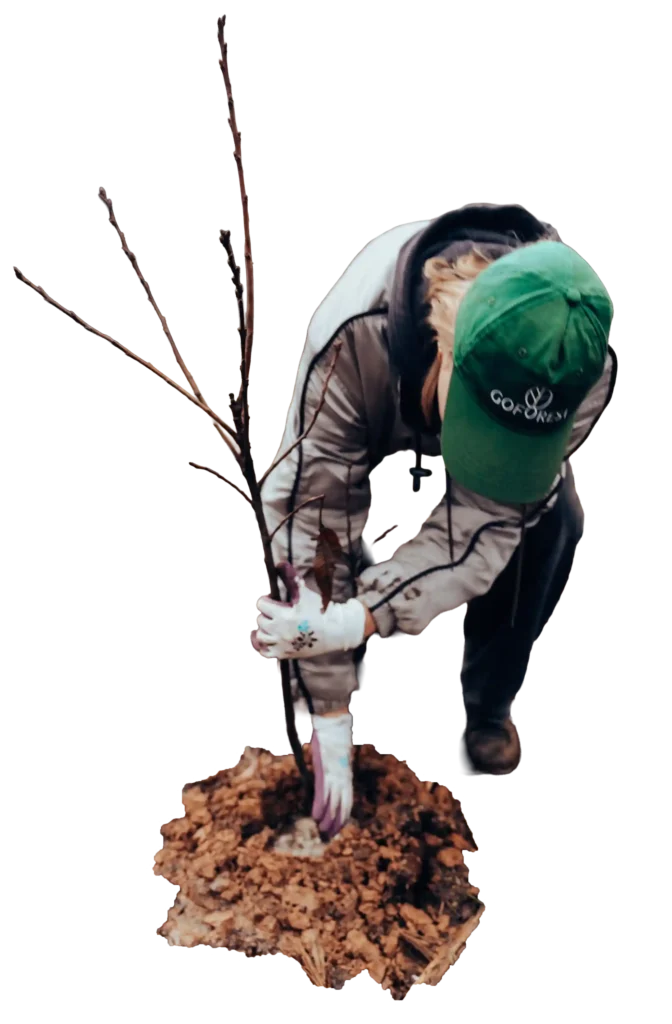
Your trees are carefully nursed, planted and maintained to ensure they create lasting impact. A layered monitoring system combining field visits, local expertise and satellite data ensures credibility.
Communication
library
- Always included
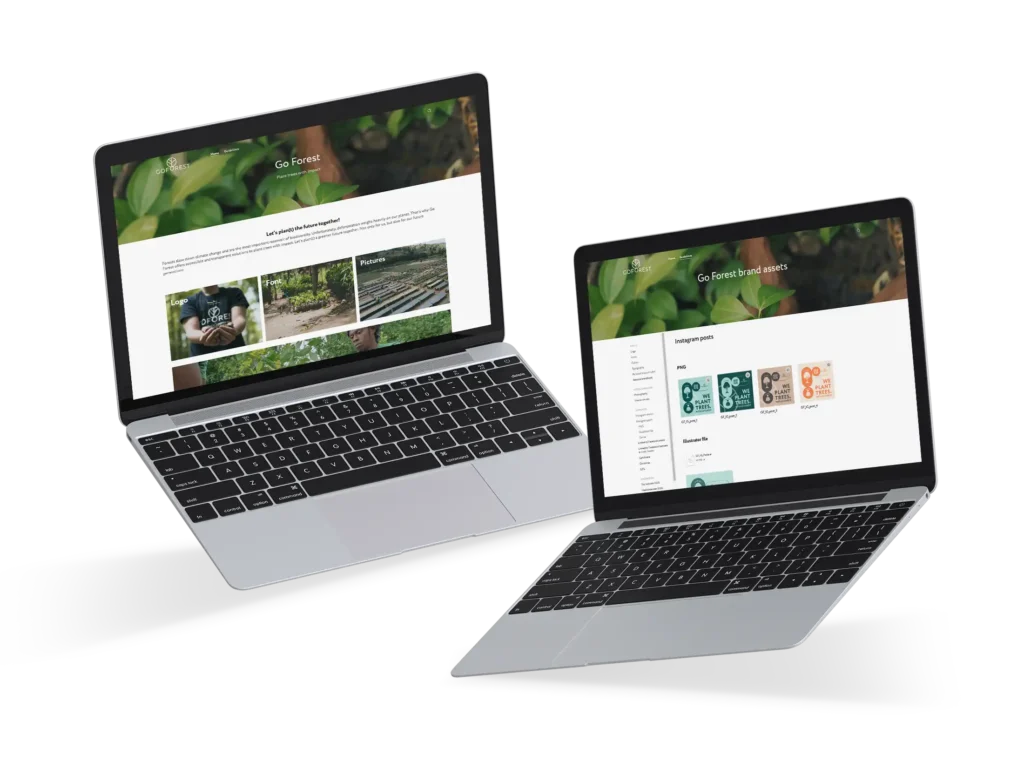
Impact deserves visibility. Our communication library provides ready-to-use visuals, templates and guidelines to help you share your commitment with confidence.
Blockchain
certificate
- Always included
Prove your impact with an annual timestamp that links your trees to a specific moment in time.
Impact
dashboard
- Optional
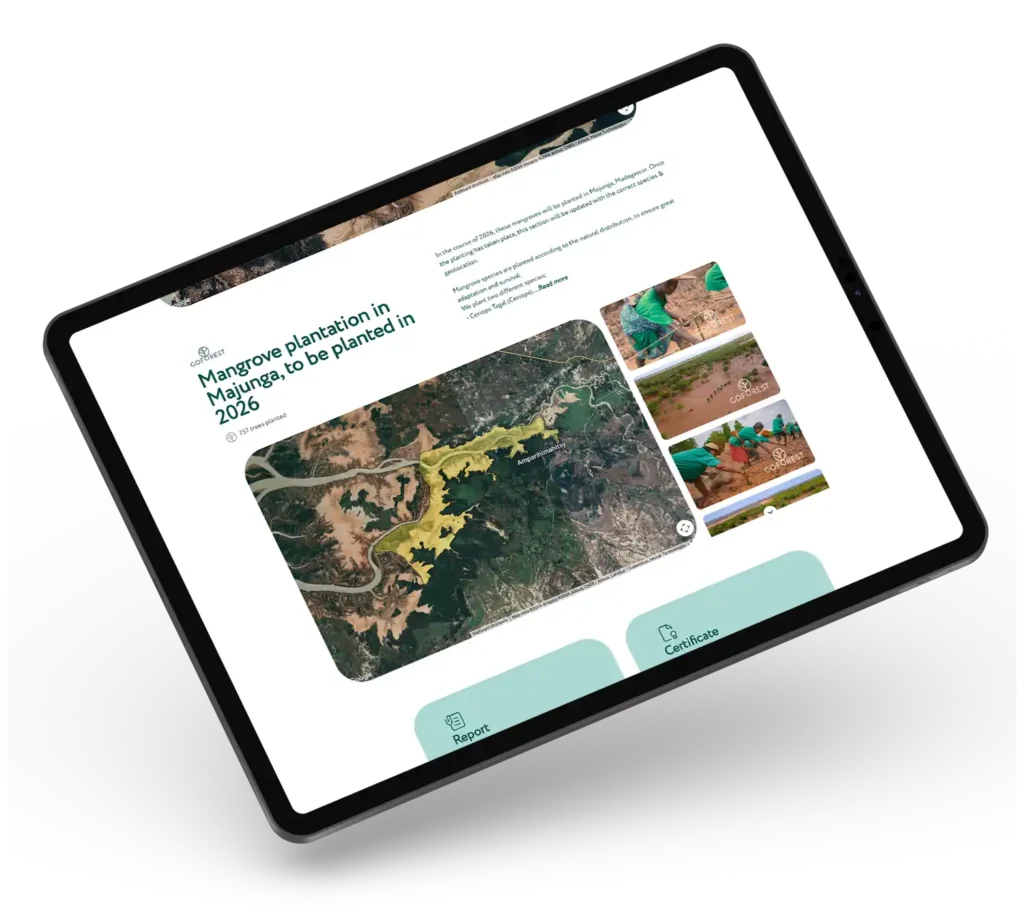
See your impact come to life through our transparent platform with real data, project updates and verified field insights. Your dashboard centralises progress tracking, key information and visual evidence, making it easy to monitor and communicate your contribution.
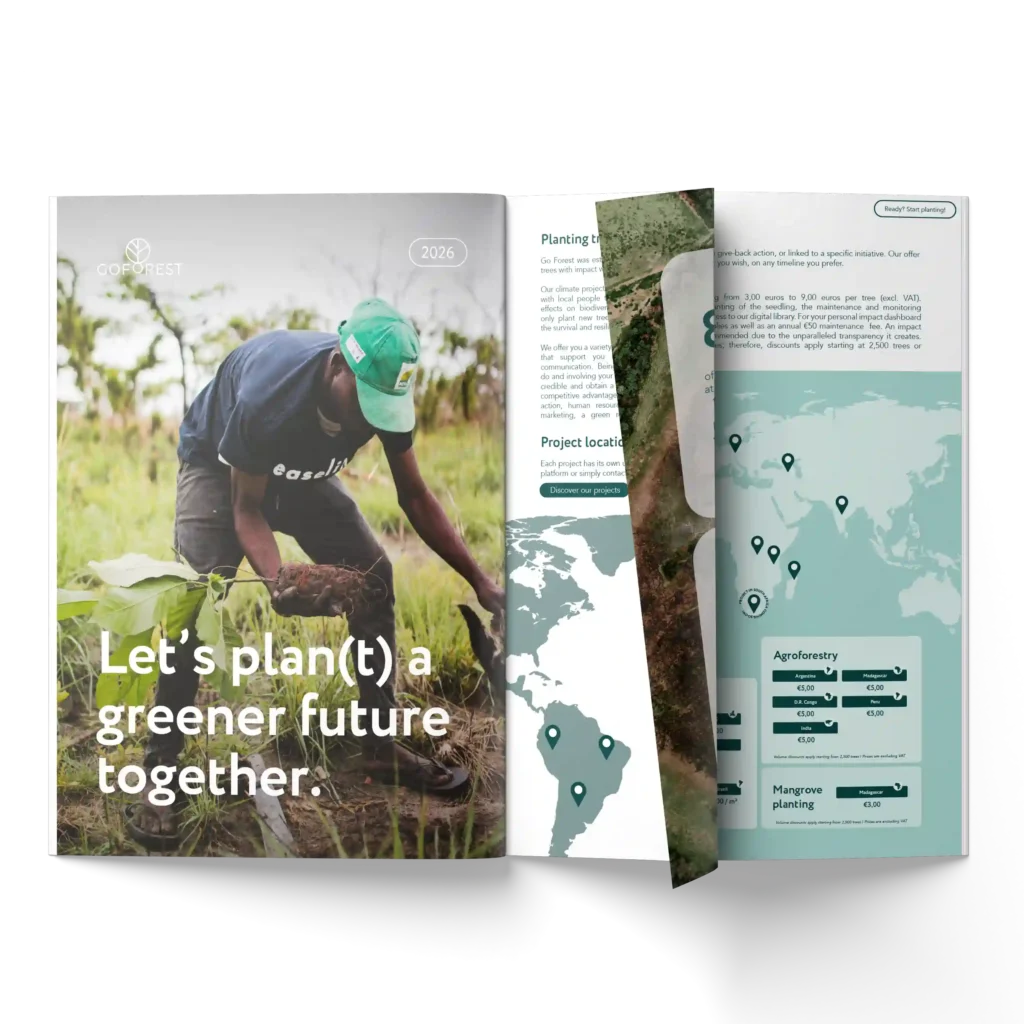
Download our brochure
If you need more information on how we work, our tools, pricing, and more.
Community-centered impact
Local communities are at the heart of every project. Restoration activities generate employment, build resilient livelihoods, and improve long-term living conditions. In this way, ecological recovery goes hand in hand with lasting social progress. Our impact dashboard provides deeper insight into the social benefits generated across all projects.
Discover our projects

Reforestation & Agroforestry in The D.R. Congo
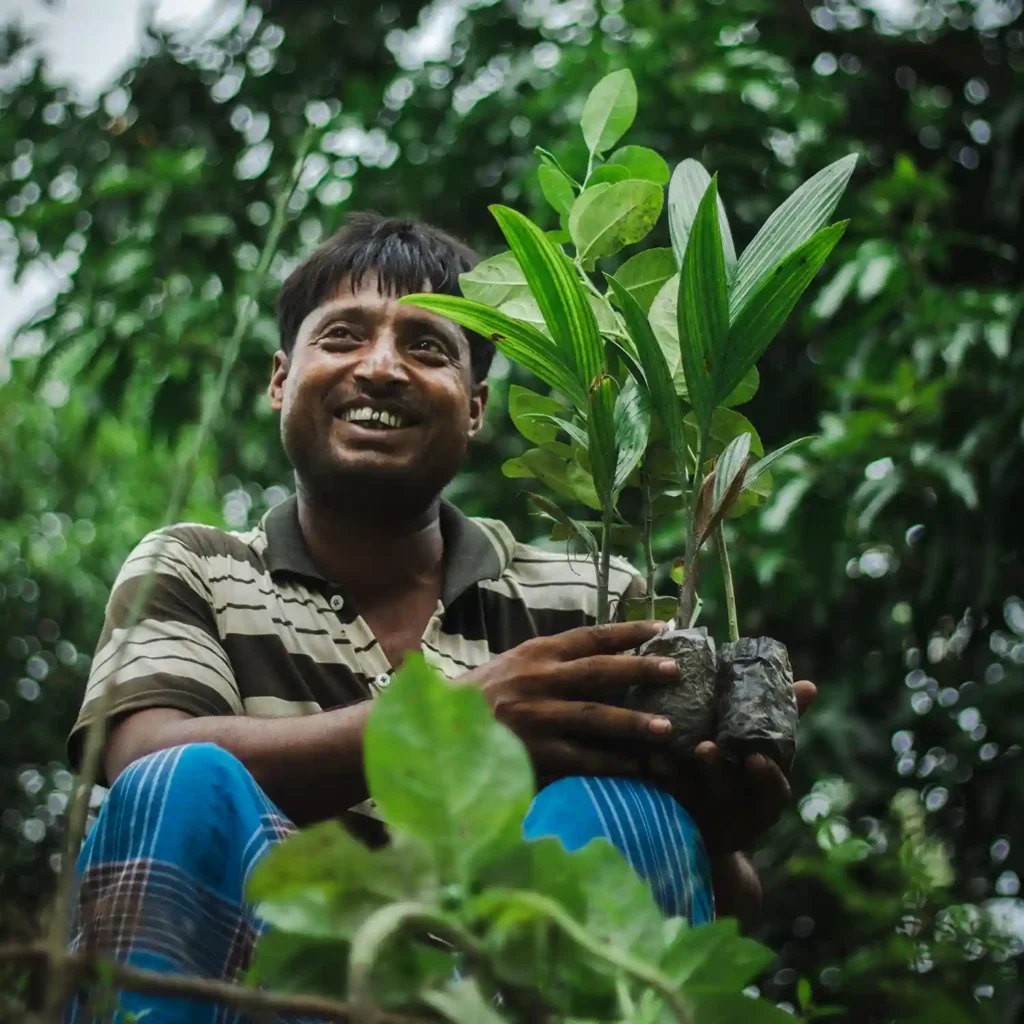
Together with Faja Lobi, Go Forest works with the local communities in a bottom-up approach to realise large-scale reforestation and agroforestry projects. We plant native species on degraded soils to restore biodiversity and the manual labor creates many local jobs.

Agroforestry in India
The primary objective of this project, in collaboration with Symagine, is to combat climate change through participatory tree planting, while also preserving threatened biodiversity, building local capacity and awareness around reforestation, and contributing to the local economy and nutrition — indirectly but meaningfully — through these efforts.


Agroforestry in India
Gold Standard ⎸ Off-take credits
This project supports marginal farmers in drought-prone regions of India by establishing resilient agroforestry systems. By integrating trees into existing farming systems, it enhances climate resilience and improves soil health and biodiversity. Carbon revenues and non-timber products diversify income, while education and gender equality initiatives strengthen rural communities.

Agroforestry & Reforestation in Argentina
Go Forest and field partner Alianza Wichi act to protect and defend indigenous cultures, nature, and biodiversity of the Yunga and Chaco regions in northern Argentina.


Mangroves & agroforestry in Madagascar
In Madagascar, social enterprise Bôndy and Go Forest focus on planting trees in an agroforestry system as well as mangroves in coastal areas.
![]()

Mangroves in Madagascar
Gold Standard ⎸ Pre-finance credits
This project restores degraded mangrove forests along Madagascar’s coastline, strengthening natural coastal protection and climate resilience. By replanting native species, it captures carbon and safeguards biodiversity. Local communities benefit through sustainable livelihoods such as fishing and small-scale entrepreneurship, creating long-term environmental and social value.

Forest corridors in Brazil
The Atlantic Forest in Brazil is the world's most important ecosystem next to the Amazon forest - and it's quickly disappearing. Less than 15% of the forest remains; if we don't take action now, it will be gone within a generation.

Reforestation & Agroforestry in Tanzania
The aim of the reforestation project is to restore the loss of biodiversity and regain the nature of the Magamba Nature Forest Reserve by planting new trees. In cooperation with the Changamoto Youth Development Organization.


Reforestation in Europe
Thousands of hectares of forests are threatened by climate change, pests, and diseases in Europe. That is why we, together with Sylva Nova, decided to give the forest ecosystem in Europe a hand as well.


Afforestation in Armenia
Armenia faces significant risks caused by climate change. Exceptional weather phenomena and their consequences have become especially frequent: droughts, landslides and forest fires. Together with our partner My Forest Armenia, our afforestation projects fight desertification, combat soil erosion, and preserve the water.

Agroforestry in Peru
In Peru, the community-based agroforestry project in cooperation with Camino Verde focuses on partnering with indigenous communities in Peru’s Amazon region to build diverse agroforestry systems and regenerative supply chains for endangered species.


Peatland restoration and protection in Indonesia
Verra ⎸ Off-take credits
This project protects and restores critical peatland ecosystems in Indonesian Borneo, preventing emissions from deforestation and peat degradation. Through rewetting and reforestation, it delivers verified emission reductions while safeguarding biodiversity. Community programmes in employment, healthcare, and education support long-term local resilience.
Some frequently asked questions
- First, you order your trees! You can fill in our form, specifying your preferred number of trees one-off, every month, every quarter or every year, related to your tree planting initiative. Of course, you can also choose to engage in a virtual conversation with us for a customized approach.
- After we receive your order, we’ll start our processes. We’ll update your impact dashboard and send you the invoice. Once your trees are paid for, we order them with our local partner. Depending on the time of the year, your trees will be growing in our nurseries, getting ready to be planted or we’ll start planting your trees. Updates will appear on your impact dashboard.
- After the planting, we start our period of maintenance. We’ll follow the saplings grow closely in the first years when they are most vulnerable to weather conditions, competing species, pests, and diseases. After 3 to 5 years, our trees are growing steadily and we can reduce the number of controls. During the period of maintenance, we have several quality checks to make sure all the trees we’ve ordered are growing steadily.
- Read more about it in the FAQ “Questions on the tree-planting”.
Our climate project experts carefully select high quality restoration projects worldwide, including reforestation, agroforestry and mangrove initiatives. In Belgium and other European countries, project locations depend on the availability of privately owned land with committed landowners. Beyond Europe, projects are typically developed in partnership with environmental NGOs or local and indigenous communities.
Trees are needed everywhere, but we focus on planting them where they generate the greatest positive effect on biodiversity, carbon storage, employment, livelihoods and the local economy. This means planting the right trees, in the right environments, with the right partners and using the right methods.
The duration of maintenance and monitoring depends on the project location. Trees are typically maintained for three to five years, depending on regional conditions. During this period, active care supports early growth and healthy establishment.
In temperate regions, we guarantee protection and monitoring for 30 years. In tropical regions, this protection period is typically 10 years. Thinning activities are thoughtfully planned to support forest health and resilience. The harvested wood can be sold by the landowner, providing a responsible way to manage the forest while maintaining its ecological value. Within these guaranteed periods, clearcuts are not permitted.
Of course, we do everything we can to ensure forest health, protection and survival well beyond these fixed periods.
All of our projects undergo a rigorous due diligence process before selection. We assess ecological indicators, governance structures, land ownership, nursery practices and community involvement to ensure that restoration activities align with clearly defined standards and long-term objectives.
During and after planting, projects are monitored through a layered system that combines field verification, local expertise and satellite-based monitoring. On-site visits are conducted regularly, and planting activities are cross checked against registries and field observations to safeguard accuracy and accountability.
Each project is mapped on our impact platform, where you can follow progress, access location data and review field updates. Transparency is not an add-on. It is built into every step of the process.
Still in doubt? Go there and check for yourself!
- No, Go Forest is a social enterprise, a company that operates with the primary goal of creating positive social or environmental impact. While traditional businesses focus primarily on generating profits for their shareholders or owners, social enterprises prioritise addressing social issues, improving communities, or tackling environmental challenges.
- Success at Go Forest is measured not only by financial metrics but foremost by the number of trees we plant, the local income we create, the biodiversity we bring back, and so on.
Completely up to you! Every tree planted contributes to positive change, and we value each commitment. The most important principle is honest communication about your objectives and realizations.
If you are looking for guidance, planting can be aligned with your CO₂ emissions. As an indication, a tree in Belgium captures approximately 175 kg of CO₂ over its lifetime, while a mangrove captures around 116 kg.
If you are unsure which approach best fits your organisation, we are happy to analyse your situation together and explore what structure aligns most closely with your strategy and needs.
Got more questions? Take a look at our full FAQ.
If you still don’t find the answer, get in touch with our team!