News & insights

Certified vs. non-certified ecosystem restoration: Navigating the right choice for your company
Companies are under increasing pressure to show that their sustainability strategies deliver measurable impact. One of the most strategic choices they face is how to approach ecosystem restoration. Should projects be linked to carbon credit certification or should they focus on non-certified initiatives? As the Corporate Sustainability Reporting Directive (CSRD) reshapes disclosure requirements across Europe, this decision has become a matter of credibility and compliance, with direct implications for long-term strategy.
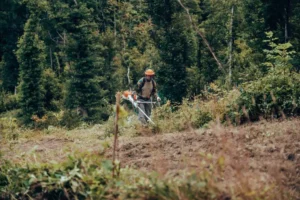
Enhancing forest resilience through thoughtful thinning practices
An interesting article published in Forest Ecology and Management sheds light on a question we often receive at Go Forest: why do we thin our forests? In the meta-analysis, Chagnon et al. (2025) analyzed 50 peer-reviewed field studies across temperate and boreal forests in Europe and North America. They examined how different thinning strategies impact forest resilience and resistance to four major stressors: drought, pests, windstorms and fire.
From net zero to nature positive: the next frontier in corporate sustainability
For years, net zero has been the dominant framework for climate action. But as biodiversity loss accelerates and ecosystems collapse, it’s clear that carbon neutrality alone won’t secure a livable planet. A new paradigm is emerging. One that recognizes nature as the foundation of climate stability, human health and economic resilience. That paradigm is nature positive.
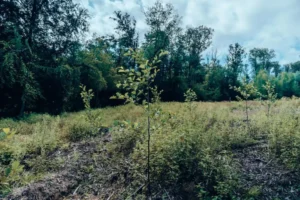
Forests: our green allies in the fight against climate change
Forests are much more than just a source of tranquility and nature experience. They play a key role in global efforts to combat climate change. As natural “carbon sinks,” they absorb large amounts of CO₂ from the atmosphere. But this delicate balance is under pressure.
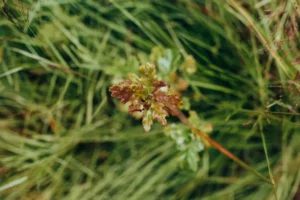
Let’s talk about the looks of a young forest
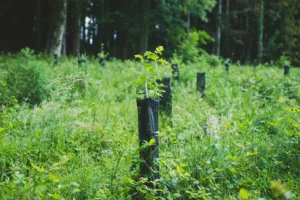
When you look at a freshly planted forest, you might expect to see tall trees, dense shade, a vibrant understory… But instead, you’re probably seeing something that feels a bit messy, too open, or even unfinished. And that’s completely normal.
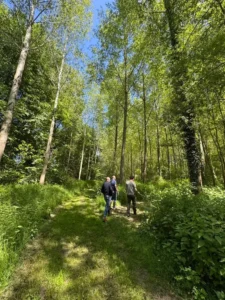
A hidden gem in Hamont-Achel
A few weeks ago, Go Forest had the privilege of visiting a unique and privately owned forest in Hamont-Achel, guided by its passionate caretaker, Stijn Lauwers, and his son. What we discovered was more than just a beautiful landscape.
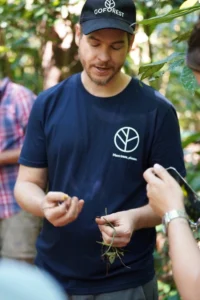
Why we started in the Amazon
In 2020, Go Forest planted its first trees in the Amazon. Not just any location, but a region that is crucial to the health of our planet. This project marked the beginning of something significant: a mission to create a positive impact on both the environment and local communities. But why did we start here?
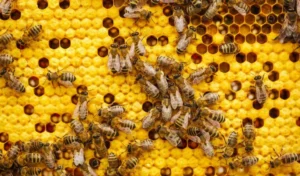
Without bees, no forests: why these pollinators matter more than you think
They may be small and easy to overlook, but bees are essential to life on Earth. While we often associate them with flowers and honey, their role in maintaining ecosystems reaches much further. They support the regeneration of forests, help biodiversity flourish and connect countless elements of the natural world. In this blog post, we explore why bees are under threat, what makes them so important for forests, and how we at Go Forest contribute to a future where both bees and forests can thrive.
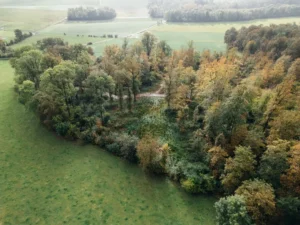
Why partnering with private landowners is a smart choice for corporate reforestation initiatives
In the face of global change and environmental degradation, reforestation has become a key strategy for restoring our planet’s ecosystems. While publicly owned lands play a significant role in conservation efforts, there’s a growing recognition of the importance of supporting private landowners throughout their forest restoration and management activities. This article explores how focusing on private lands may be the next ‘reforestation boom’, and how it can be particularly effective for companies interested in sustainable forest restoration projects to integrate into their sustainability journey.

Purpose Statement
Go Forest has been dedicated to planting trees for four years, actively working across 17 countries, primarily funded by corporate partnerships. We aim to continue expanding our reach and impact, contributing to a greener future for all.

Book review: Entangled Life by Merlin Sheldrake
Entangled Life by Merlin Sheldrake explores the mysterious, often overlooked, and maybe even underrepresented world of fungi. Sheldrake, a biologist with a deep passion for mycology, invites you to reconsider your understanding of life, ecosystems, and the interconnectedness of all living things through the lens of these fascinating organisms.

Ensuring quality and transparency in reforestation
At Go Forest, our core team in Belgium may not be very large, but our reach and impact are. Through a vast network of dedicated partners and colleagues, we uphold high standards of quality and transparency in our reforestation efforts. Our strategic collaborations and meticulous processes ensure that every tree planted contributes effectively to combating climate change.

Our Impact Platform 2.0 is live!
At the start of 2023, we were dreaming about a Go Family impact platform that would be able to show the positive impact made in our projects.

Go Forest restoration projects as primary forests’ pressure-relief
Not only conservation projects, but also reforestation and agroforestry projects — with a community focus and sustainable management practices — can play a crucial role in relieving stress on primary forests worldwide.

Navigating Green Marketing: 5 key do’s & don’ts in sustainable communication and marketing
In the fast-evolving landscape of sustainability marketing, businesses face a paradox: meeting consumer demands for more sustainable products and services while remaining credible and authentic. Especially when planting trees or restoring corals, you aim to engage your audience, not alienate them.

2023 wrapped: our year report
We wrap up 2023 in style and detail. For those who want to know what we’ve been up to in 2023, watch the video.

Forestry project types in Belgium and other European countries
Thousands of hectares of forests are threatened by climate change, pests, and diseases in Belgium and other European countries. That’s why we – together with our technical partner Sylva Nova – are committed to different projects for creating and maintaining healthy, diverse, and climate-resilient forests.

Learn about tree planting in The Netherlands
In this video we talk to the landowner of a Go Forest reforestation project in Markelo, The Netherlands. This video tells you more about tree-planting in The Netherlands but also in almost all European countries. Underneath the video you can find t(h)ree facts about our local tree planting initiatives.

Calculate the carbon storage of your forest restoration project
Accurate carbon measurement of reforestation initiatives can be quite difficult. Carbon storage depends on many factors such as tree species, climate, biodiversity, and more. That’s why we have partnered with Genvision, a company that specializes in accurately measuring, projecting, and visualizing carbon stored by forests. Through this collaboration, Go Forest members can have a science-based estimate, and later calculation, of the carbon stored by their tree planting project.

How can you plant your own trees and get subsidies for them in Belgium?
It is a fact; we need more forest. It is also a fact that forests do not stop at national borders, but planting close to home ensures that you can fully enjoy nature. Not only organizations can plant forest, you as an individual can also do your part, but without guidance it can quickly become very complicated. Therefore, we thought it would be good to go through the different steps to plant your own forest. Finally, we also tell you how to obtain subsidies.

Let’s talk about tree planting in the Amazon Rainforest!
The project team of Camino Verde in the Amazon Rainforest practices a variety of distinct kinds of reforestation and agroforestry as part of the forest restoration activities together with Go Forest.

What is the difference between climate projects that generate carbon credits and Go Forest projects?
The Go Forest projects are not carbon credit projects. For many people, it is not clear why the Go Forest reforestation, agroforestry, or mangrove projects are not carbon certified and do not generate carbon credits. Since trees do absorb carbon from the atmosphere, this is indeed confusing. This article will help you understand the difference between the two types of projects and why it is important that they both exist.

The ecological impact of Black Friday
It’s almost that time of the year again. Some may call it the best day of the year, others call it consumerism at its best. What is Black Friday? And what is its impact on the environment and climate?

The social impact of a Go Forest project
Trees do not only have a positive ecological impact on the planet and all its inhabitants, but they can also have a massive positive impact on society and economic development. When planting trees in the right way and in the regions that need them the most, these trees can change lives.

The value of trees – beyond carbon sequestration
When talking about planting trees, companies and individuals might be inclined to only think about carbon sequestration. While carbon sequestration is often displayed as the main benefit of trees, there is much more to the story. We will go more into detail on this below.

Belfius x Go Forest
As part of a 2022 campaign, Belfius asked Sarah Parent about “The Love” behind her entrepreneurial journey.

Why you should plant trees in Armenia
Last week we visited our tree planting project in Armenia and, wow. We have been impressed by nature; educated about the current issues; shown new nursing, mulching, and planting techniques; moved by the impact of the project; and, most of all, welcomed very warmly by our Armenian partners.

Why you should plant trees in Madagascar
We all know we’re facing big problems in the world today, but it’s even more shocking to see those problems with your own eyes. It is the greatest motivation ever to continue with the tree mission but it touches your soul. Some moments are burned into your retina forever.

Bigger team, bigger impact!
Go Forest is growing and so is the workload. That’s why two new “leaders for a greener world” joined the Go Forest team in February.

De Tijd x Go Forest
With the support of a Swiss climate consultant, East Flemish entrepreneur Sarah Parent wants to grow her start-up Go Forest into one of the largest ecological companies in our country. ‘Pushing many entrepreneurs in the right direction is more important than making a few companies climate neutral in one fell swoop.’

Our first intern is leaving for Peru!
This weekend Anaïs Van Malderen leaves for our reforestation project in Peru to do a 3-month internship in the Forest Conservation and Management Department of Camino Verde, our reforestation partner in Peru.

We are running out of time!
It’s five to twelve for the climate. Go Forest and Rodania join forces to call for action. The result of this unique collaboration is a limited edition watch that stylishly captures the ticking of the clock. The profits of the Go Forest x Rodania watch will go entirely to Go Forest’s tree planting projects.

Greetings from Peru!
At this moment, one of our founders, Sarah is in Peru visiting for the first time our reforestation & agroforestry project in Madre de Dios. She has only been there a couple of days, but the experience is already amazing. Let her take us on this journey!